

How I Built a 200+ Hat Collection on an Artist’s Budget (Without Selling My Soul)
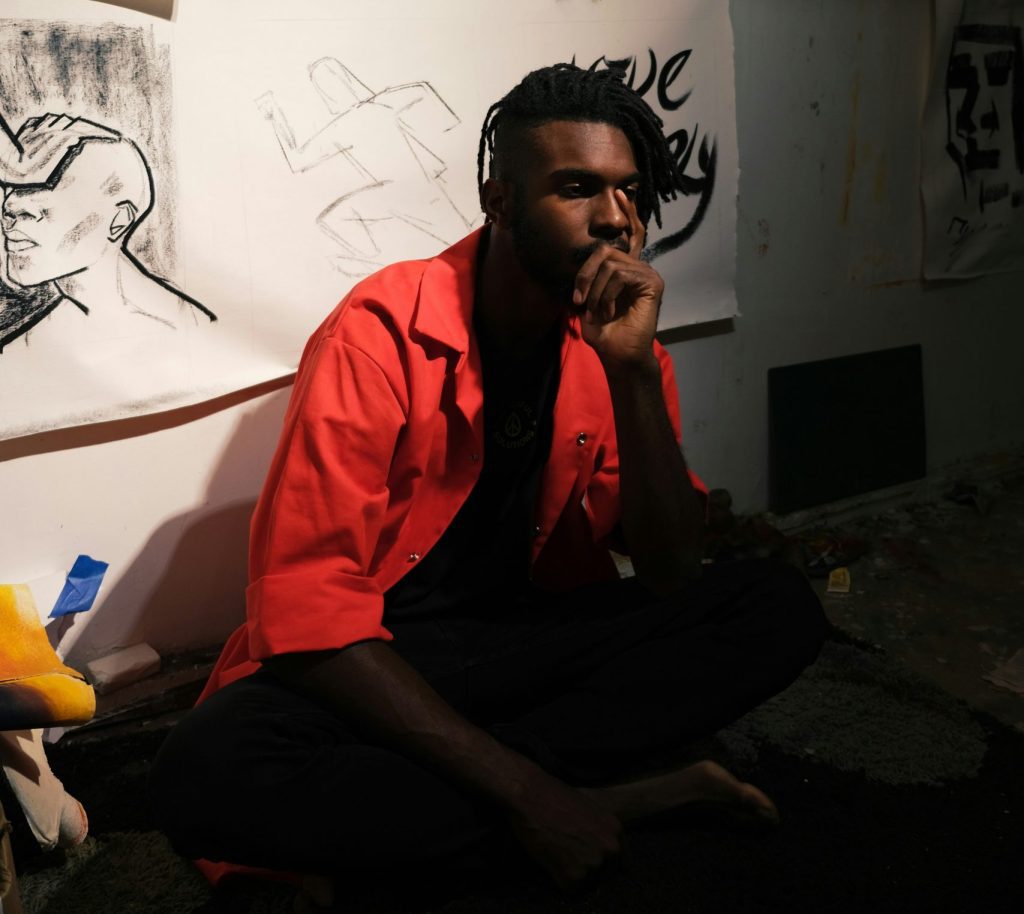
Last week at my studio in East Point, a collector looking at my paintings asked if the wall of hats was part of the installation. “No,” I said, adjusting my vintage Kangol, “that’s just my personality having a conversation with my ADHD.” She laughed, but I was serious. Two hundred and twelve hats, collected over five years, each one under $30. Most under $15. My ex called it an addiction. I call it affordable self-expression in a world that wants Black queer artists to fit in neat little boxes.
Growing up in Decatur, my mom used to say I was born wearing a hat. Not literally, but I’ve been covering my head since I was seven and decided church crowns were the most powerful things I’d ever seen. Mrs. Washington at our AME church had a different hat every Sunday, each one telling a story about who she decided to be that morning. That was my first lesson in transformation through accessories. Now, at 28, living off art sales and the occasional mural commission, I’ve turned hat hunting into both an art form and a financial strategy.
Here’s the thing about being a Black queer artist in the Atlanta suburbs: you’re either invisible or hypervisible, never just existing. Hats let me control that narrative. Corporate meeting at the High Museum? Minimalist beret. Underground show in Little Five Points? Vintage bucket hat with pins from every protest I’ve attended. Family reunion where half my relatives still think bisexuality is “just a phase”? Church crown that would make Mrs. Washington proud. Each hat costs less than a therapy session and works better for my mental health.
The Little Five Points Education
Little Five Points is obviously ground zero for alternative fashion in Atlanta, but tourists shop wrong. They hit Junkman’s Daughter, pay $45 for a hat that was $8 at the thrift store two blocks away, then leave thinking they got the authentic experience. Meanwhile, I’m at Lost-N-Found Youth’s thrift store on Moreland, where hats are $3-5 and the money goes to homeless LGBTQ youth. That leather captain’s hat that gets me compliments at every gallery opening? Four dollars. The vintage Braves snapback that starts conversations about gentrification and the old Atlanta? Three fifty.
The secret is going on Wednesdays when they restock. The weekend tourists get leftovers. Wednesday at 11 AM is when the good stuff hits the floor. Plus, the volunteer working Wednesdays, Marcus, saves the weird artistic hats for people he knows will appreciate them. Being a regular matters. Last month, he held a 1970s velvet fedora for me because “it screamed your name.” Five dollars. I wore it to my opening at MINT Gallery and someone offered me $200 for it. I didn’t sell.
Rag-O-Rama is touristy but their hat section is underrated because everyone’s distracted by vintage band tees. First Monday of the month, everything’s 20% off. Stack that with their punch card (buy 10 items, get 20% off), and you’re getting $30 hats for $15. The key is building relationships. The buyer, Jessica, knows I’m looking for anything architectural or asymmetrical. She texts me when good stuff comes in.
The Suburban Goldmine
Here’s what Atlanta natives know: the suburbs are where deals live. Gwinnett has the largest Korean population outside Korea, and the thrift stores in Duluth are filled with Korean street fashion that hasn’t hit mainstream US yet. Bucket hats that would be $80 in Buckhead vintage stores are $8 at Goodwill on Pleasant Hill Road.
The Marietta Goodwill near the Square is my secret weapon. Old white conservatives donate incredible vintage without knowing what they have. I found a 1960s John B. Stetson fedora for $6. The same hat sells for $300 on Etsy. But I’m not reselling. I’m building an archive of American fashion history that includes my aesthetic, not just what museums think is worth preserving.
Fayetteville’s even better because it’s military adjacent. Soldiers coming back from deployment donate hats from everywhere. German wool caps, Korean baseball caps with better construction than New Era, Japanese streetwear that would cost hundreds on Grailed. All under $10 because Fayetteville Goodwill prices everything the same.
The Beauty Supply Revolution
Black beauty supply stores are the most underrated hat sources in Atlanta. Not the Korean-owned ones (no shade, but different inventory), but the Black-owned ones. Beauty Max on Candler Road sells church hats, kufi caps, durags that are basically art, and the best selection of caps outside a mall. Everything under $20.
During wedding season (April through June in Atlanta), they stock formal hats that would be $200 at Neiman Marcus for $35. I have a rose gold pillbox hat that photographs beautifully in my self-portraits. Twelve dollars. The aunties shopping there give free styling advice too. “Baby, tilt it more to the left. There you go. Now you’re saying something.”
The beauty supply stores also have the best pride merchandise that doesn’t feel corporate. Rainbow durags, bi-pride snapbacks that actually look good, not like something designed by straight people who Googled “bisexual flag colors.” Supporting Black-owned businesses while building my collection. That’s community economics.
The Instagram Algorithm Hack
Instagram thinks I’m a hypebeast, a vintage collector, a church lady, and a protest organizer simultaneously. My algorithm is confused and beautiful. This means I get targeted ads for hat sales from every demographic. The trick is never buying from the first ad. Add to cart, leave it, wait for the “come back” email with 20% off.
But the real hack is Instagram’s suggested posts. Follow Atlanta thrift stores, vintage sellers, and estate sale companies. The algorithm starts showing you individual sellers desperate to move inventory. Last month, a guy in Buckhead was moving to Portland and selling 50 hats for $100 total. His loss about Atlanta’s “vibe changing” was my gain. Half those hats were unworn, tags still on.
The Pop-Up Economy
Atlanta’s pop-up market scene is unmatched. Beltline markets, Underground Atlanta events, Sweet Auburn Curb Market vendors. But here’s the strategy: go in the last hour. Vendors don’t want to pack up inventory. Prices drop 30-50%. That hand-painted cap that was $40 at noon? Twenty dollars at 4 PM when they’re tired and ready to go home.
The monthly punk rock flea market at 529 Bar in EAV is where alternative kids sell their collections to pay rent. Quality is high, prices are desperate. I got a vintage Malcolm X cap that way for $8 from a kid who needed gas money. I also commissioned him to paint a custom piece on another hat. Supporting young artists while building my collection.
The Church Hat Circuit
Estate sales in Black neighborhoods are different. When church mothers pass, their families often don’t know the value of those hat collections. I’m respectful about it, but I’ve gotten museum-quality pieces for under $20. There’s a vintage Halston hat in my collection from an estate sale in Cascade Heights. The family was happy someone appreciated “mama’s fancy hats.”
The key is going to estate sales in historically Black neighborhoods: Cascade, Collier Heights, Southwest Atlanta. The companies running them usually don’t know Black fashion history, so they price everything low. That’s changing as Atlanta gentrifies, but for now, it’s still possible to find pieces of Black fashion history for nothing.
Online But Local
Facebook Marketplace in Atlanta is wild because everyone’s either moving here or leaving. Tech bros arriving from San Francisco sell their “Atlanta phase” hats when they realize Midtown isn’t Brooklyn. Artists leaving for cheaper cities sell entire collections for gas money.
The search trick is misspellings. “Kangol” gets you resellers. “Kangal” or “hat lot” gets you people who don’t know what they have. “Moving sale” plus any Atlanta zip code equals gold. Set alerts for specific neighborhoods. Virginia Highland moving sales are bougie minimalists getting rid of quality. East Atlanta moving sales are artists who need rent money.
The Wholesale Secret
The fashion district downtown is dying but still has wholesale hat shops that sell to the public if you know how to ask. Wan’s Fashion on Mitchell Street sells church hats wholesale. Buy three, get 40% off. I go with friends, we split the discount, everyone wins. Those $60 hats at department stores? Fifteen dollars each when you buy three.
The same shops supply beauty supply stores. Cut out the middleman. Mr. Park at Atlanta Wholesale Hats doesn’t advertise, doesn’t have a website, barely speaks English, but his prices are unbeatable. Cash only, no returns, but when you’re getting $5 snapbacks that are better quality than Lids, who cares?
The Festival Strategy
Atlanta’s festival season is hat heaven. Music Midtown, Afropunk, Pride, ONE Musicfest. Vendors overprice everything during the festival, but here’s the move: follow them on Instagram, message after the festival when they’re trying to clear inventory. “Hey, I loved that hat at Afropunk but couldn’t afford festival prices. Any chance you still have it?”
Seventy percent of the time, they’ll sell it for half price plus shipping. My best Afropunk find was a leather kufi with brass details. Festival price: $80. Two weeks later: $30 shipped. The artist was happy to make the sale, I was happy to support Black creators without festival markup.
The Queer Exchange
Atlanta’s queer community has an informal exchange economy that straights don’t know about. We trade, gift, and support each other outside traditional retail. My friend who does drag gives me hats that are too subtle for performance. I paint portraits for trade. Another friend who works at Dad’s Garage theatre company hooks me up with hats from their costume department purges.
There’s a whole WhatsApp group for queer artists in Atlanta where we post stuff we’re getting rid of. It’s not charity, it’s community resource sharing. My collection includes hats from at least twenty other queer artists in the city. Each one carries stories, energy, history.
The Reality Check
My collection breaks down like this:
- Thrift stores: 89 hats, average $4 each
- Beauty supply stores: 34 hats, average $12 each
- Estate sales: 23 hats, average $8 each
- Online/marketplace: 31 hats, average $15 each
- Trades/gifts: 35 hats, value: community connection
Total spent over five years: roughly $2,000. For 212 hats. That’s less than $10 per hat average. Some people spend that on coffee every day.
But it’s not just about the money. Each hat is a choice about how I present myself in spaces that weren’t designed for Black queer artists from the suburbs. Each one is armor, art, identity, resistance. My wall of hats is a timeline of who I’ve been and who I’m becoming.
What This Actually Means
When you’re making art that doesn’t always sell, living in a city that’s rapidly gentrifying, existing in multiple communities that don’t always overlap, you need anchors. Hats are mine. They’re affordable transformation, accessible art, wearable rebellion.
Young Black artists hit me up on Instagram asking how I maintain my aesthetic on an artist’s income. This is how. You find the things that make you feel like yourself and you figure out how to access them without selling out. You learn your city’s hidden economies. You support your communities while building your archive.
Last month, I sold a painting for $5,000. My biggest sale yet. First thing I did? Bought a vintage Basquiat-era Comme des Garçons hat from a collector in Virginia Highland. Sixty dollars, which is more than I usually spend, but sometimes you celebrate. The rest went to rent, supplies, and saving for my next series.
My mom visits my studio now and laughs at the hat wall. “Still collecting personalities?” she asks. “Still becoming myself,” I answer. She gets it now. In Atlanta, in America, being a Black bisexual artist means constantly negotiating space. Hats let me do it on my terms, without breaking the bank.
Next week, there’s an estate sale in Cascade, a new shipment at the Duluth Goodwill, and my friend is cleaning out their closet. My collection will grow, but my budget won’t. That’s the art of it. Finding yourself in what others overlook, building your archive from what the world discards, creating your aesthetic from the margins. Two hundred twelve hats and counting, each one a choice, a statement, a small revolution. All for less than the price of one month’s rent in the gentrified Atlanta that’s trying to price us out.