

The Private School Question: A Pastor’s Honest Math on Faith, Finances, and Our Kids’ Future
The Private School Question: A Pastor’s Honest Math on Faith, Finances, and Our Kids’ Future
By Cam Benson
Last Sunday after service, I sat in my office at our church in Costa Mesa, staring at two pieces of paper. One was a tuition invoice from Orange County Christian Academy for $28,000. For one child. For one year. The other was an email from a family leaving our congregation because they couldn’t afford Orange County anymore, partly due to private school costs. The irony wasn’t lost on me that I was contemplating the same financial decision that just drove parishioners out of the area.
My wife Sarah and I have three kids: Matthew (14), Grace (11), and Luke (8). We’ve been wrestling with this decision since Matthew started kindergarten. As a pastor making $75,000 a year in a county where the median home price is over a million dollars, the math has always been challenging. But it’s not just about math. It’s about values, community, fear, faith, and honestly acknowledging what we’re really paying for when we write those checks.
This year, we made a change that shocked our church community. After nine years of private Christian education, Matthew started at Corona del Mar High School. Public school. The reactions ranged from concerned (“But what about his faith?”) to envious (“I wish we were brave enough”). The truth is, it wasn’t about bravery. It was about looking honestly at what we were actually getting for $84,000 a year in tuition versus what our excellent public schools offer for free.
The Real Cost of Private School (It’s Not Just Tuition)
Let me break down what private school actually costs our family. Tuition for three kids at OCCA would be $72,000 this year. But that’s just the beginning. There’s the “voluntary” donation ($3,000 minimum to not feel shame at fundraisers), uniforms ($800 per kid annually), the iPad program ($1,500 each), before and after care because school ends at 2:30 ($4,500 per kid), and the constant fundraisers where you’re expected to bid generously on silent auction items because it’s “for the children.”
Then there are the hidden costs. The spring break mission trip to Mexico ($1,200 per kid). The “optional” summer enrichment programs that everyone does ($2,000). The tutoring because even though you’re paying for premium education, somehow your kid still needs extra help with algebra ($100/week). The gas driving to a school 25 minutes away instead of the one three blocks from our house.
All told, we were looking at close to $100,000 annually for three kids. That’s more than my salary. After taxes. We were literally going into debt for elementary school. Sarah’s photography business was entirely funding tuition while we lived on my salary, and we still weren’t breaking even.
What We’re Actually Paying For
Here’s what nobody wants to admit: at the elementary level, OCCA wasn’t providing better academics than our local public school. Coast View Elementary, three blocks from our house, has higher test scores than most private schools in the area. Their kindergarten teacher has a master’s from Stanford. The private school kindergarten teacher was lovely but had been teaching for two years.
What we were paying for was the environment. The Christian worldview integration. The smaller classes. The fact that every family looked like us, believed like us, and valued what we valued. We were paying for comfort. For safety. For the bubble.
I’m not dismissing these things. When Matthew was getting bullied at public school in second grade and we moved him to OCCA, the environment change was worth everything. But seventy-two thousand dollars worth? Every year? While we can’t fund our retirement or save for college?
The Public School Reality Check
When Matthew started at Corona del Mar High, I expected spiritual warfare. I expected aggressive secularism, drugs in the bathrooms, and teachers indoctrinating him with values we oppose. What I found was more Christians than at his private school. His AP Biology teacher opens class with a moment of silence “for prayer or reflection.” The Young Life group has 200 kids. His history teacher, who attends Mariners Church, presents multiple perspectives on everything.
The academics are superior to anything OCCA offered. Matthew has access to 15 AP classes, a robotics lab that rivals colleges, and language options beyond Spanish and Biblical Hebrew. The theater program just did Les Misérables with production values that made my jaw drop. OCCA’s high school puts on a Christmas pageant in the gym.
Yes, there are challenges. Matthew heard language in the hallways he’d never heard before. There was a vaping incident in his PE class. His health textbook has chapters we had to discuss as a family. But aren’t we supposed to be preparing our kids for the actual world? Jesus didn’t tell us to hide in Christian bubbles. He said to be salt and light.
The Financial Freedom Math
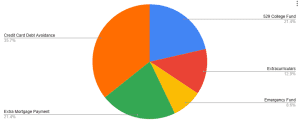
Here’s what putting Matthew in public school freed up: $28,000 in post-tax dollars. That’s roughly $40,000 in pre-tax income I don’t have to earn. Here’s what we did with it:
- $500/month to his 529 college fund (will have $30,000 by graduation)
- $300/month for extracurriculars he actually chose (guitar lessons, basketball league, Young Life camps)
- $200/month to our emergency fund
- $500/month extra on our mortgage
- $833/month we’re not adding to credit card debt
The stress reduction in our marriage is worth its own calculation. We’re not fighting about money every month. Sarah doesn’t have to take every photography job that comes along. I can actually focus on ministry instead of constantly worrying about making ends meet.
The Christian School Mythology
As a pastor, I’m supposed to be the biggest cheerleader for Christian education. But let me share some uncomfortable statistics from our congregation. Of the kids who graduated from OCCA in the last ten years, roughly the same percentage stayed in church as those who went to public school. The divorce rate among OCCA families? Identical to public school families. The kids getting caught with drugs or alcohol? Happens at both.
What makes the difference isn’t the school. It’s the family. It’s dinner table discussions, family devotions, how parents model faith, and whether kids see authentic Christianity lived out or just performed on Sundays. I’ve seen public school kids become ministry leaders and private school kids become atheists. The school isn’t the determining factor.
Private school can actually create a false sense of security. Parents think they’ve outsourced spiritual formation to professionals. “We pay $28,000 a year, so our kids are getting faith education.” Meanwhile, they’re not praying with their kids, not discussing faith questions, not modeling servant leadership. The school becomes a very expensive substitute for parenting.
The Public School Opportunity
Matthew being at public school has opened ministry opportunities we never expected. He started a prayer group that meets before school. Twenty kids show up. He’s having actual faith conversations with classmates who’ve never heard the gospel, not just comparing youth group experiences with other church kids.
Our family is now connected to our actual community, not just our church community. We know our neighbors because our kids go to school together. Sarah’s photography business has exploded because she’s networked with local families. I’ve had more pastoral conversations at Coast View Elementary pickup than I have at church functions.
Grace and Luke are still at OCCA for now, but we’re planning to transition them to public school. Grace is nervous but excited about the art program at the public middle school. Luke just wants to walk to school instead of driving “forever” every morning.
The College Reality
Here’s the brutal math: if we keep all three kids in private school through high school, we’ll spend roughly $800,000 on K-12 education. Eight hundred thousand dollars. That’s four years at Stanford. For each kid. That’s a house in Orange County (okay, a small house, but still).
Meanwhile, UC Irvine is twenty minutes away, costs $15,000 annually for tuition, and is world-class. Our public high schools have relationships with UCI, guaranteed admission programs, and concurrent enrollment options. The private schools? They’re pushing $60,000/year private colleges that would require massive loans.
Matthew’s college counselor at Corona del Mar showed us pathways to UCs and Cal States that would leave him debt-free. His earning potential coming out of UCI engineering with no debt is better than coming out of Pepperdine with $200,000 in loans. That’s stewardship, not compromise.
The Privilege Problem
Let’s acknowledge the elephant: we’re debating this from a position of incredible privilege. Our public schools are some of the best in the nation because we live in Orange County. Our property taxes are astronomical, but they fund exceptional schools. Families in Santa Ana or parts of Anaheim face completely different calculations.
But even with our excellent public schools, the pressure to go private is intense. At church, families assume pastor’s kids go to Christian school. There’s subtle judgment when you say “Corona del Mar High” instead of “OCCA.” I’ve had parishioners question whether we’re “compromising our values” or “putting money before faith.”
The truth? We’re putting stewardship before status. We’re choosing financial wisdom over Christian consumer culture. We’re refusing to go into debt for a product that isn’t demonstrably better than the free alternative.
What Private School Does Well
I’m not anti-private school. For some families, it’s the right choice. If your local public schools are genuinely failing, private school might be worth the sacrifice. If your child has specific needs that private school addresses better, it makes sense. If you can afford it without compromising other financial priorities, wonderful.
OCCA gave Matthew a foundation during crucial years. The smaller environment helped him build confidence. The integration of faith and learning in elementary years was beautiful. Some of his teachers were exceptional Christians who modeled faith beautifully.
But here’s what I’ve learned: those benefits have diminishing returns. By high school, kids need to own their faith, not have it spoon-fed. They need to navigate different worldviews, not be sheltered from them. They need to learn to be Christians in the real world, not in a sanitized environment.
The Honest Assessment
If I’m brutally honest, much of our private school decision was driven by fear and pride. Fear that public school would corrupt our kids. Pride in being the pastor whose kids went to Christian school. Fear of judgment from our congregation. Pride in belonging to the OCCA community.
We were paying $72,000 a year to manage our anxieties and maintain our image. That’s not good theology or good stewardship. It’s definitely not good financial planning.
Our Current Approach
Matthew thrives at public school while staying grounded in faith through church, youth group, and family discipleship. We put the money saved toward his future and our financial stability. Grace will likely start public middle school next year. Luke might stay at OCCA through elementary because he’s struggling with reading and needs the smaller class sizes. We’re taking it kid by kid, year by year.
We’ve also started a scholarship fund at church for families who genuinely need private school but can’t afford it. Instead of spending $72,000 on our own kids’ private education, we can help multiple families who have no other options. That feels more like kingdom economics.
The Bottom Line
Private school in Orange County is a luxury product marketed as a necessity. For most families in our area with access to excellent public schools, it’s not worth the financial sacrifice. The academic outcomes are comparable, the spiritual formation still depends primarily on parents, and the cost can cripple a family’s financial future.
If you can afford private school without debt, without compromising retirement savings, and without stress on your marriage, it might enhance your child’s education. But if you’re like us, making $75,000 in a county where that’s considered low-income, the math doesn’t work. The sacrifice isn’t noble; it’s poor stewardship.
My kids are getting excellent education at public school. They’re learning to live out their faith in a pluralistic environment. We’re not drowning in debt. Our marriage is stronger. We can actually save for college and retirement. And Matthew’s faith? It’s stronger than ever, because he’s had to own it, defend it, and live it out in the real world.
That Sunday in my office, staring at that $28,000 invoice, I made a decision that went against everything our Christian subculture expected. But it aligned with everything I believe about wisdom, stewardship, and preparing kids for authentic faith. Sometimes the most faithful decision isn’t the most religious-looking one. Sometimes it’s the one that makes sense.
Next week, I’m speaking at our church’s parenting seminar. The topic? “Raising Kingdom Kids in a Consumer Culture.” I plan to be honest about our journey. Some families will be offended. Others will be relieved. But maybe, just maybe, we can start having honest conversations about what we’re really buying when we write those tuition checks, and whether it’s worth the price we’re paying.